How can small businesses develop an e-commerce website that attracts customers and generates online sales? Start by choosing the right e-commerce platform, creating clear product pages, setting up secure payments, and making the shopping experience easy on mobile devices. A successful online store also needs search engine optimization, reliable shipping options, and a simple checkout process.
E-commerce is an important opportunity for growing businesses. In the third quarter of 2026, online sales accounted for 17.9% of total U.S. retail sales, according to the U.S. Census Bureau (source: Quarterly Retail E-Commerce Sales). This shows why businesses need an online store that makes it easy for customers to browse and purchase products.
What Is E-commerce Website Development?
E-commerce website development is the process of creating an online store where customers can view products, add items to a cart, make payments, and place orders. It includes website design, product management, payment integration, shipping configuration, security, and ongoing maintenance.
For small businesses, the website should be easy to manage and provide customers with a smooth buying experience. Whether you sell clothing, beauty products, electronics, or handmade items, your online store should support your products and business goals.
Which E-commerce Platform Is Best for Small Businesses?
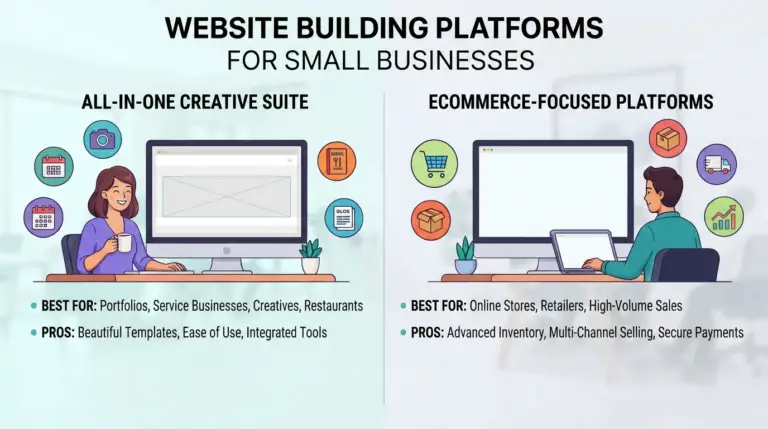
The right platform depends on your budget, product catalog, technical requirements, and plans for growth. Here are three options to consider.
Source: Metaclosys, W3Techs, Shopify pricing
These options serve different needs. Shopify provides a hosted store, WooCommerce offers WordPress-based flexibility, and custom development can support more specific business requirements. Compare total costs, maintenance, and integrations before choosing.
What Features Does a Small Business E-commerce Website Need?
A professional online store should make shopping simple from the first visit to the final purchase. Focus on these essential features.
1. Mobile-Friendly Website Design
Customers should be able to browse products, read descriptions, and complete purchases on smartphones and tablets. Use responsive layouts, readable text, clear navigation, and appropriately sized product images.
2. Product Pages and Categories
Every product should have a dedicated page with a descriptive title, clear images, pricing, available sizes or variations, and useful product information. Organize products into categories so shoppers can find what they need without unnecessary searching.
3. Secure Payment Integration
Offer trusted payment methods that suit your target customers. Depending on your market, these may include card payments, digital wallets, bank transfers, or cash on delivery. Use secure payment gateways and HTTPS to protect customer information.
4. Shopping Cart and Simple Checkout
A complicated checkout can cause customers to leave before completing an order. Baymard Institute reports a global average cart abandonment rate of 70.19% (source: Baymard checkout research).To reduce unnecessary friction, display shipping charges clearly, allow guest checkout, minimize form fields, and show customers the total cost before payment.
5. Inventory and Order Management
Your store should make it easy to track stock, update product availability, manage orders, and send confirmation emails. As your business grows, inventory and CRM integrations can reduce manual work.
How Do You Optimize an E-commerce Website for SEO?
E-commerce SEO helps search engines understand your store and helps shoppers discover relevant products.
Follow these important practices:
Optimize product titles: Use descriptive product names that match customer search terms.
Write unique descriptions: Explain product features, materials, benefits, and uses instead of copying supplier descriptions.
Create SEO-friendly URLs: Use short, readable URLs that describe each product or category.
Add image alt text: Describe product images clearly to support accessibility and image search.
Build internal links: Link related products, categories, and useful buying guides.Use structured data: Add relevant Product, Offer, and BreadcrumbList markup where appropriate.
Create an XML sitemap: Help search engines discover important product and category URLs.
Google recommends linking products through category navigation and using relevant structured data to help it understand e-commerce pages (Google Search Central: E-commerce site structure and e-commerce structured data).
How Much Does E-commerce Website Development Cost?
The cost depends on the platform, design complexity, number of products, integrations, and custom features. A basic store using a ready-made theme usually requires less development work than a custom e-commerce website.
When planning your budget, consider:
Domain registration and hosting or platform subscription
Website design and development
Payment gateway and transaction fees
Premium themes, plugins, or apps
Product photography and content
Security, maintenance, and ongoing SEO
Do not compare development quotes only by their initial price. Check what is included, who manages updates, and whether future features can be added without rebuilding the entire store.
How Metaclosys Helps Small Businesses Develop E-commerce Websites
Choosing a platform is only one part of building an online store. The website also needs to reflect your brand, organize products clearly, support secure transactions, and make it easy for customers to complete purchases.
Metaclosys helps businesses develop e-commerce websites using Shopify, WooCommerce, and custom storefront solutions. Its website development services include mobile-first design, product management, secure checkout integrations, SEO foundations, and analytics setup.
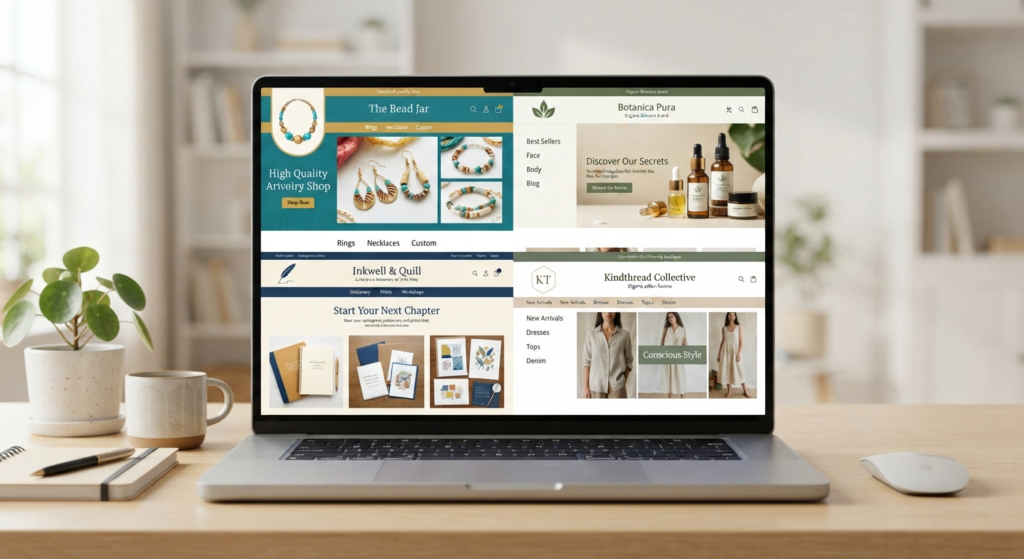
For example, a clothing business may need product variations and inventory management, while a beauty store may need organized product categories and a streamlined checkout. A growing retailer may require custom integrations to connect its store with other business systems.
If you want an online store designed around your products and business requirements, explore Metaclosys website development services.
Frequently Asked Questions
1. What is the best e-commerce platform for small businesses in 2027?
Shopify is suitable for businesses that want a hosted online store, while WooCommerce offers flexibility through WordPress. Custom development may be better for businesses with specialized features or integration requirements.
2. How much does it cost to develop an e-commerce website?
The cost depends on the platform, number of products, design, integrations, and custom functionality. Additional expenses may include hosting, subscriptions, payment fees, maintenance, and marketing.
3. Can I build an e-commerce website without coding?
Yes. Shopify and WooCommerce offer themes, extensions, and store-building tools that allow business owners to create online stores without advanced coding skills. Complex features may require professional development.
4. What features are essential for an e-commerce website?
Important features include mobile-friendly design, product pages, category navigation, secure payment options, shopping carts, checkout, inventory management, and order tracking.
5. How can I get my e-commerce website ranked on Google?
Create unique product descriptions, optimize titles and URLs, use relevant structured data, improve site speed, build internal links, and submit your sitemap through Google Search Console. These practices support search visibility but do not guarantee rankings or indexing.