What are the best Bubble alternatives for custom web app development in 2027? The best options depend on how much control, flexibility, and scalability your project needs. WeWeb is suitable for visually building web applications with code export, FlutterFlow supports web and mobile app development, and Retool is designed for internal business tools. Businesses that need complete control over their architecture can also choose custom development with a professional team such as Metaclosys.
Bubble is a popular no-code platform for creating applications without traditional programming. However, as a project grows, businesses may need more control over source code, integrations, hosting, performance, or backend architecture. Exploring Bubble alternatives can help you find a solution that better supports your long-term plans.
Why Look for Bubble Alternatives?
Bubble provides visual development tools, a built-in database, and workflow automation. However, it may not suit every project.
Businesses often explore alternatives when they need:
More control over application code and hosting.
Flexible backend architecture and database options.
Advanced API integrations.
Custom authentication and user permissions.
More control over performance and infrastructure.
A development approach that supports future expansion.
The right choice depends on whether you want to build independently with a visual editor or develop a fully customized web application.
What Are the Best Bubble Alternatives in 2027?
Here are three options worth considering for custom web app development, including their features and starting costs where publicly listed.
Source: Metaclosys, Official pricing Webflow, Official pricing Flutterflow
Prices are listed in USD and can change. WeWeb hosting may cost extra depending on the deployment option, while FlutterFlow projects may also require a separate backend service.
1. WeWeb: Best for Visual Web App Development
WeWeb is a visual development platform for creating responsive web applications. It allows users to design interfaces and connect them to external databases, APIs, and backend services.
Unlike a platform that keeps the entire application within its own environment, WeWeb supports code export and self-hosting on eligible paid plans.
Key features:
Drag-and-drop visual editor.
API and data integrations.
Responsive web application layouts.
GitHub synchronization.
Code export and self-hosting.
WeWeb can be useful for startups building customer portals, SaaS interfaces, and dashboards. It is worth considering when visual development is important but you also want more deployment flexibility.
2. FlutterFlow: Best for Web and Mobile Applications
FlutterFlow is a visual app development platform built around Flutter. It supports applications for web, mobile, and desktop, making it useful for businesses planning multiple digital experiences.
Developers can connect applications to services such as Firebase and Supabase, integrate APIs, and download source code on eligible plans.
Key features:
Visual application builder.
Firebase and Supabase integrations.
API connections.
Web and mobile app development.
Source-code download.
FlutterFlow is a strong option when a business wants to develop a web application alongside mobile applications. However, teams should consider their backend requirements and technical skills before selecting it.
3. Retool: Best for Internal Business Applications
Retool focuses on building internal tools that connect to business databases, APIs, and existing systems.
It can help teams create dashboards, reporting interfaces, inventory tools, and administrative applications without developing every interface from scratch.
Key features:
Database and API connections.
Internal dashboards.
Workflow automation.
User permissions.
Cloud and self-hosted deployment options.
Retool is particularly useful for applications used by employees and operations teams. It is less of a direct replacement for Bubble when your main goal is building a fully customized public-facing SaaS product.
How Do You Choose the Right Bubble Alternative?
Before selecting a platform, define what your web application needs to accomplish.
Consider Your Application Requirements
A customer portal, SaaS platform, internal dashboard, and booking application have different technical requirements. Identify the main features, user roles, data structure, and integrations before comparing tools.
Check Code Ownership and Hosting
Some platforms offer code export, while others manage most of the application infrastructure. If you need to host your application independently or maintain greater control over its code, review these capabilities carefully.
Compare Pricing and Long-Term Costs
Do not look only at the starting subscription price. Consider hosting, database services, API usage, user limits, developer support, and future maintenance.
Evaluate Scalability and Security
Your application should support growing user numbers, expanding data, and additional functionality. Check authentication, access permissions, backups, deployment options, and security practices before committing.
How Metaclosys Helps Build Custom Web Applications
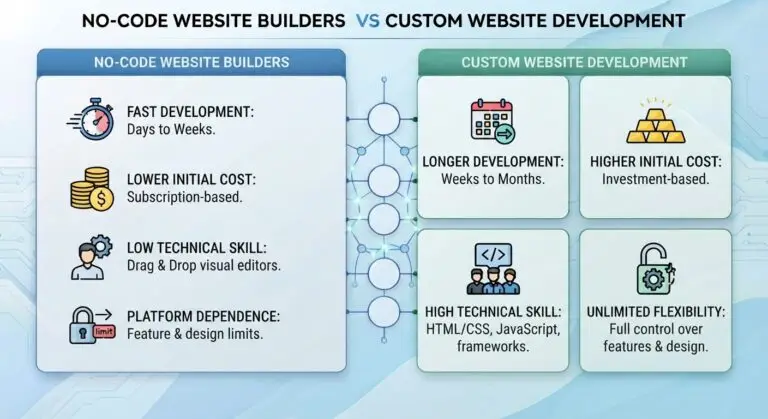
Visual app builders can be useful for prototypes and straightforward applications. However, projects with complex business logic, specialized integrations, or unique user experiences may require custom development.
Metaclosys helps businesses build custom web applications around their specific workflows and goals. Its development services include SaaS platforms, customer portals, dashboards, secure authentication, API integrations, payment connections, and scalable application architecture.
For example, a growing company may need a customer portal where users can manage accounts and track requests. A SaaS startup may need subscription management, role-based access, and an administrative dashboard.
Metaclosys works with technologies such as Next.js, MERN, and Laravel to develop applications based on project requirements. If a visual builder cannot provide the flexibility your project needs, explore Metaclosys custom web app development.
Frequently Asked Questions
1. What is the best alternative to Bubble in 2027?
WeWeb, FlutterFlow, and Retool are useful alternatives, depending on the project. WeWeb is suitable for visual web app development, FlutterFlow supports web and mobile apps, and Retool focuses on internal business applications.
2. Is WeWeb better than Bubble?
WeWeb may be a better fit when code export, self-hosting, and external backend flexibility are important. Bubble offers an integrated environment with its own database and workflow tools. The better choice depends on the application.
3. Can I build a custom web app without Bubble?
Yes. You can use visual development platforms such as WeWeb and FlutterFlow or work with developers using technologies such as Next.js, React, MERN, and Laravel.
4. Are Bubble alternatives suitable for SaaS development?
Yes. Some alternatives support SaaS interfaces, user authentication, dashboards, and API integrations. Complex SaaS products may require custom backend development, subscription management, and advanced access controls.
5. When should I choose custom web app development instead of a no-code platform?
Choose custom development when your application needs specialized business logic, complex integrations, greater infrastructure control, or functionality that a visual builder cannot support effectively.